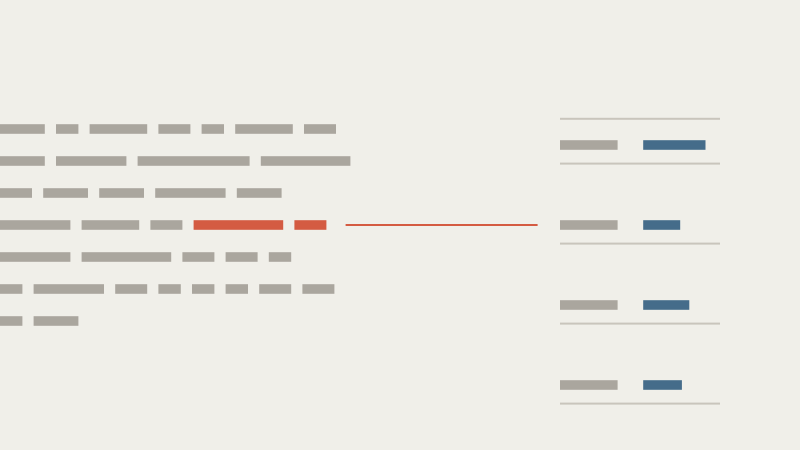
The AI worked, then the work had to change
Accurate, trusted output still has to reach an owner, change a decision, and catalyze an action. Too many companies never build that part.
- Author
 Joel PassenCEO, Solid
- Published
- November 9, 2026
- Reading time
- 7 minutes
- Written for
- CEOs and COOs

An agent flags a renewal risk correctly, and the team trusts the flag. Nothing about the account, the forecast, or anyone’s week changes as a result. That’s the failure I’m watching more of as enterprise AI matures: the agent did its job, and the outcome didn’t change.
Most of the conversation about enterprise AI ends at the insight. Did the agent fire? Is it accurate? Can it be traced? Those are the right questions, and I’ve spent most of this year writing about them. But a correct answer sits in the middle of a longer chain, and most deployments never get past it. Ah, the stuff retrospective decks are made of.
- Problem
- Signal
- Evidence, chain stops here
- Owner
- Decision
- Action
- Outcome, then back to Problem
Value shows up when evidence becomes an operating change. A renewal gets saved. A roadmap item moves up a quarter. A forecast gets cut before the board meeting instead of after it. An escalation gets an engineer assigned on Tuesday instead of Friday. Until one of those things happens, an AI output is inventory. And in relationship businesses, inventory is perishable.
Put another way, there are two gaps between an insight and a business result. The first is context: the model reasoning over fragmented, unresolved, unpermissioned data and producing confident answers nobody can validate. Close that gap and the evidence becomes trustworthy. The second gap is everything after the evidence: no clear owner, no decision point, no action, no record of what happened. It gets almost no attention, and in my experience it’s where a lot of good work goes to rot.
Accurate and ignored
Here’s the pattern I keep seeing, and it’s where a lot of enterprise AI is stuck. A team does the easy part: they get access to a frontier model. Then they make the first mistake. They starve it. They don’t give it the data that would help solve baseline P&L problems. Either they hand it a fragment, like access to their own inbox but not the inboxes of everyone who touches the account. Or they dump a pile of Gong calls into it and call that the whole truth, when most of the account’s interactions live in email and case data. So people end up with summaries of summaries of a sliver of the truth, then build countless decks to show how good they are at prompting.
The teams that get past that hit a second wall. The data is there, the insights check out, and six months later nobody can point to a decision that went differently. Sometimes the evidence never reaches the person who could act on it. Just as often, nobody can agree on which problem to solve first. That’s probably its own post, but it points to a vacuum on a lot of executive teams: no consensus on what to fix first. It feels a little like politics, which shouldn’t surprise anyone.
A few versions of it I’ve seen recently:
Last month our team looked at a renewal book worth about $4M in ARR closing in Q4. Almost every renewal sat at the CRM’s 35% stage default. The customers had already said plenty in calls and email: work stalled or never finished, acquisitions, a stated preference for one-off engagements. None of it had reached the forecast, which had missed actuals by about 22% for three quarters running. The CRM couldn’t explain the miss. The customers already had.
The same integration failure shows up in support threads across 30 accounts. The weekly summary catches it. Product never sees it, because roadmap intake runs through a PM’s spreadsheet and a quarterly planning meeting. Too many people on their own screens, not enough on the same page.
An executive sponsor goes quiet for six weeks ahead of a renewal. The system flags it correctly. The account owner is out, and the flag sits in a Slack channel until the renewal is already in trouble.
None of these are model failures. The signal was there every time. The organization just had no way to absorb it and turn it into the work that needed to get done.
Why it happens
Most enterprise AI gets deployed as a query surface. Someone asks, the system answers. That’s a pull model. The person asking can act on one discrete event, but can’t see the broader trend: the clusters of related signals leaders need in order to fix the root cause.
Outputs also arrive without a deadline or a destination. They land in a dashboard, a deck, a chat thread, places people visit when they have time. Noise. More insights for insight’s sake.
Then there’s measurement. Technical teams instrument what they can see: eval scores, latency, cost per query, retrieval precision. All of it lives on the model side. Almost nobody instruments what happens after the output. Did it reach an owner? Did it change a decision? Did the action produce an outcome? Without that, an accurate system that changes nothing looks identical to a successful one on every dashboard you’ve ever read. Usage gets mistaken for value, and the gap stays invisible until leadership mandates some archaeology project to find where the problems started in the first place.
Design backward from the decision
If the failure happens after the evidence, better evidence won’t fix it. Start from the other end: the decision, and work back to the signal.
First, get the leadership team to agree on the two or three decisions that hit the P&L repeatedly. Renewal pricing. Roadmap prioritization. Forecast calls. Expansion targeting. For each one, map who owns it, how they make that decision today, and what evidence would change how they approach it. Then build the system to deliver that evidence to that owner, with a clear view of what it should change: a process, a workflow, a resource allocation.
The renewal team I mentioned earlier did a version of this, and most of what changed was operational. They moved the start of renewal conversations from 90 days out to 180, opening with an early-renewal offer that includes access to their new AI tools at a reduced price for the next contract term. Whether or not the customer takes it, the renewal becomes a live conversation half a year out instead of a scramble in the final month, and it’s far easier to forecast.
They also changed what they inspect and when. Renewal reviews now start from everything that’s happened since the handoff from sales, not the last couple of weeks of activity, if there was any. Renewal inspection became a standing priority in the internal meeting cadence, and each rep runs their own inspection agent on their book well ahead of the customer conversation. Some renewals will still be lost for reasons nobody controls. The difference is that leadership has a much clearer read on what will actually land, and fewer surprises when it does.
That’s what the renewal team got right. Every insight has to trace back to the evidence behind it: the calls, emails, and tickets where the customer actually said it. And every piece of evidence has to land with an owner and a clear answer to the question that matters: what are we going to do about it? For them, the answer wasn’t another dashboard. They changed how the work gets done to fit what the AI could now tell them: when renewal conversations start, what gets inspected, and where the team spends its meeting time.
Most teams skip this step, and it’s the one that compounds. Once the work is organized around the evidence, you can connect an insight to what you did about it, and what you did to what happened. That’s how you learn which signals actually predict anything and which responses actually work. The system gets better at the part that matters, not just at answering questions.
That makes this an architecture problem, not merely a change-management one. Owners and decisions need to be first-class objects in the system, with the same rigor you’d give an entity or a permission. If the only record of a decision is someone’s memory of a meeting, there’s nothing to tie the outcome back to the evidence.
The model can tell you the sponsor went quiet. It can’t move the renewal conversation up six weeks. Somebody has to own that call, and the system has to be built so the evidence reaches them while it still matters. And there has to be a codified workflow the team can actually follow.
Getting the answer right means the AI worked. Getting it used means the business changed. Most teams only measure the first.
If you have a renewals process and wish you could get a better one in place, I want to talk. Here is the example I referenced in this article.
Share this article
Read next
Evidence
For relationship businesses, language is the data layer
Relationship businesses can finally put their most valuable data to work. That data is language.